
Inflation Still Elevated. What It Means for Property Investors
Australia’s latest inflation data shows headline CPI sitting at 3.8% with core (trimmed mean) inflation at 3.4%, keeping pressure firmly on the Reserve Bank of Australia to maintain a hawkish stance.
In short: the door remains open for further interest rate hikes.
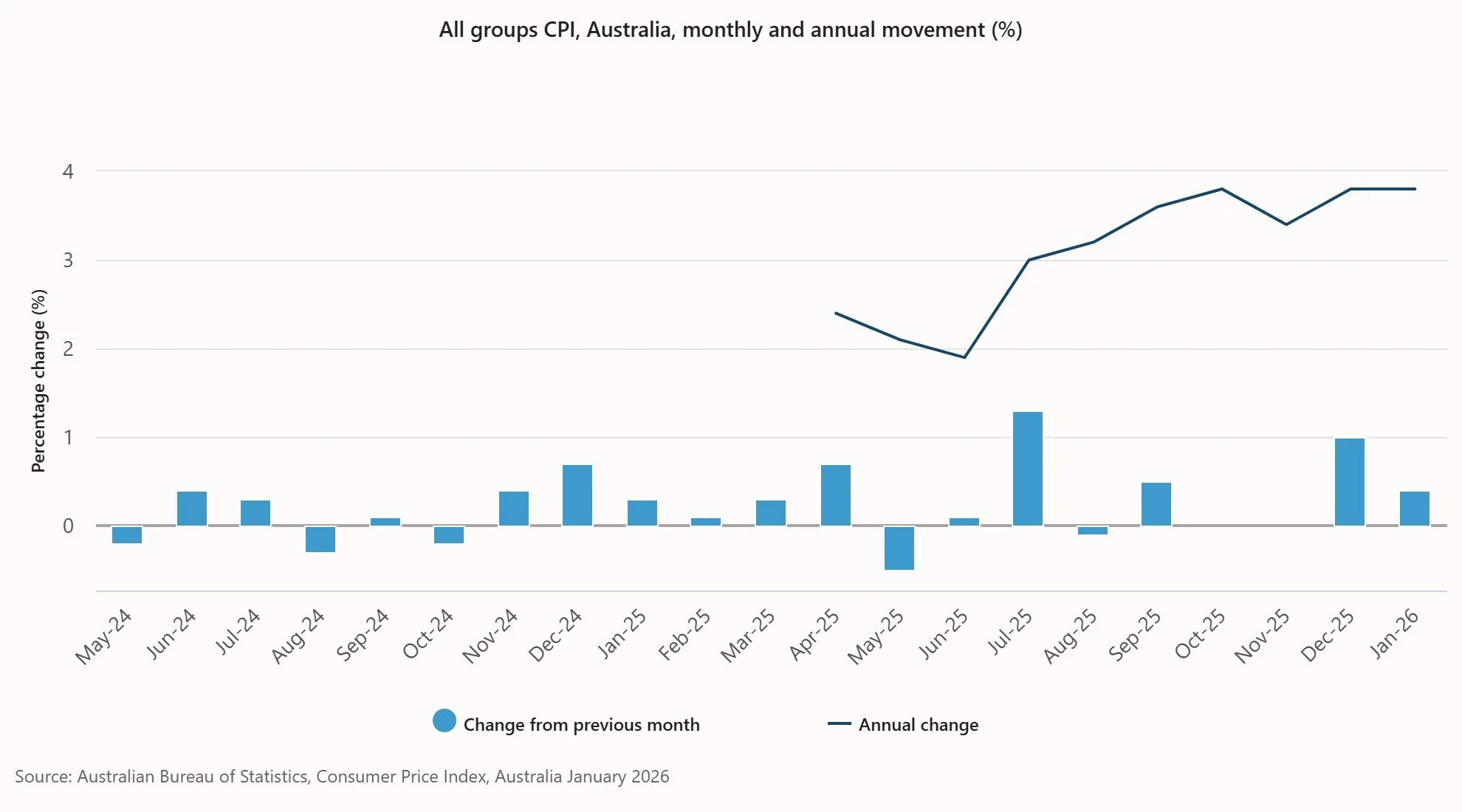
What’s Driving Inflation?
Price pressures are still broad based, with increases across:
Housing costs
Education fees
Alcohol and tobacco (largely tax driven)
Clothing and footwear (unexpected given a relatively strong dollar)
These sticky components make it harder for inflation to fall quickly, which limits the RBA’s ability to cut rates anytime soon.
Why This Matters for Property Investors
Higher inflation typically leads to higher interest rates but it also highlights something important:
Hard assets like property historically perform well in inflationary environments.
Here’s why:
Construction costs rise, restricting new supply
Holding costs increase, pushing rents higher over time
Cash loses purchasing power, making tangible assets more attractive
Quality locations with strong demand continue to outperform
While rate hikes can soften short term sentiment, they often create buying opportunities for investors who focus on fundamentals rather than headlines.
The Bigger Picture
The RBA is walking a tightrope trying to slow inflation without tipping the economy into recession. With a tight labour market and wages picking up, policy will likely stay restrictive longer than many expect.
For investors, this reinforces the importance of:
Buying in high demand, supply constrained locations
Prioritising asset quality over yield chasing
Thinking long term rather than reacting to short term rate noise
Our Take
Interest rates move in cycles. Inflation comes and goes.
But owning the right property in the right location is what compounds wealth over time.
Periods like this tend to reward disciplined investors who stay strategic while others sit on the sidelines.
If you’re planning your next move, focus less on predicting the next RBA decision and more on securing investment grade assets that can outperform through the cycle.