
Clearance Rates Are Below 60%. Here Is Why Most Buyers Are Getting This Exactly Wrong
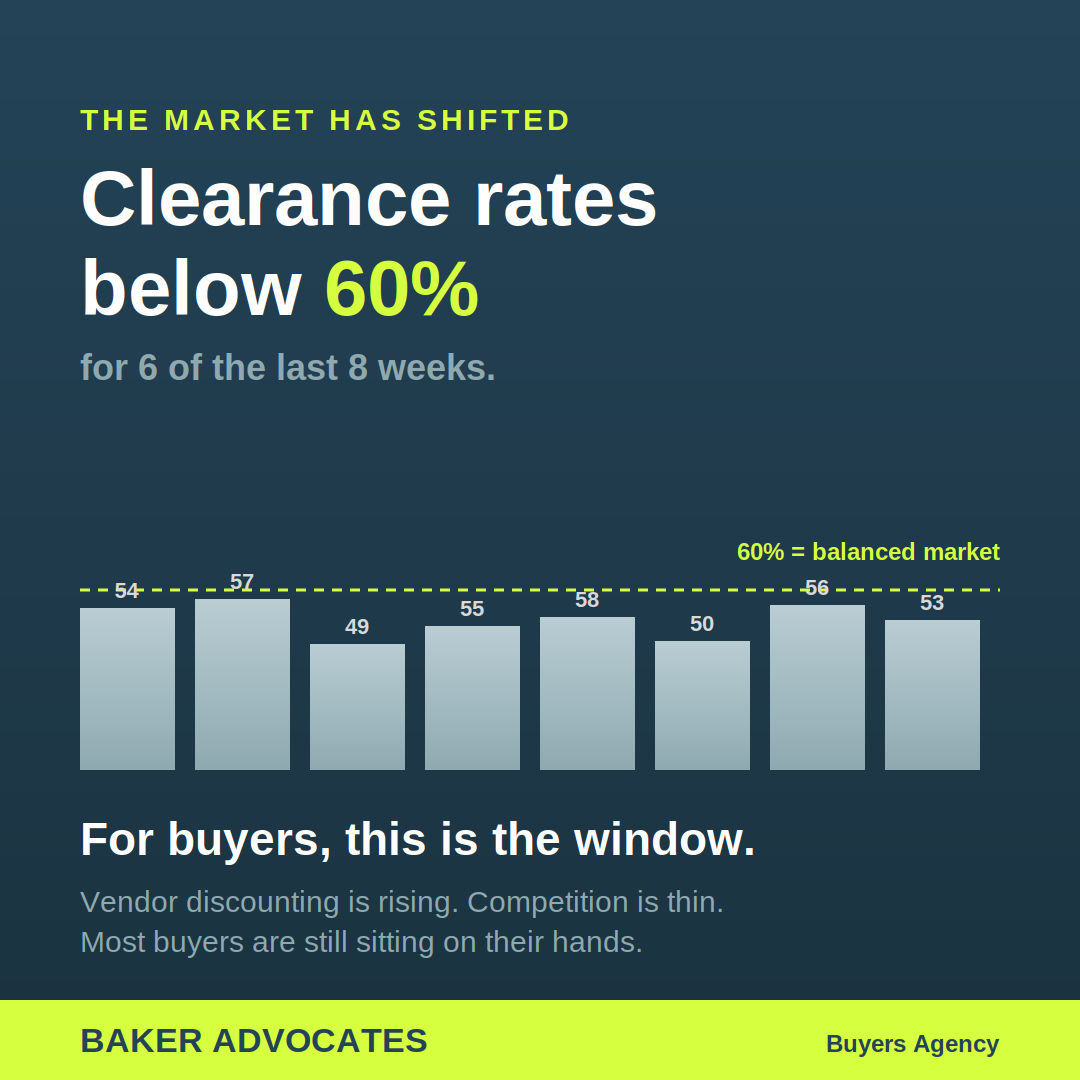
Auction clearance rates have sat below 60% for six of the last eight weeks.
If you only read the headlines, that sounds like a problem. Soft market. Falling prices. Time to wait.
But sit with that number for a moment, because it is telling you something most buyers are too nervous to hear. A clearance rate under 60% is not a warning sign. For a prepared buyer, it is the green light. And right now most people are still sitting on their hands, waiting for a feeling that, by the time it arrives, will have already cost them the opportunity.
Let me walk you through what is actually happening, why your gut is lying to you, and what the buyers who win in markets like this do differently.
What a sub 60% clearance rate actually means
Clearance rate is simply the percentage of properties that sell at auction on a given weekend. It is one of the fastest read outs we get on the balance of power between buyers and sellers.
When clearance rates push into the 70s and 80s, sellers hold the cards. Multiple bidders, emotional bidding wars, prices running well past reserve. That is the market most people remember and quietly fear walking into.
When clearance rates fall below 60%, the balance tips back the other way. Around that 60% mark is what the industry considers a balanced market. Below it, buyers gain leverage. Fewer bidders turn up. More properties pass in. Vendors who priced for last year's market are forced to meet reality.
That is exactly where we are. Combined capital city clearance has been stuck below 60% since the second week of March, with the softer weekends dipping into the high 40s and low 50s. These are the weakest auction conditions of the year so far.
And here is the part that matters for you. Vendor discounting across the combined capitals has crept up to around 3.1%, properties are taking longer to sell, and more deals are quietly being done before and after the auction rather than under the hammer. Translation: the auction is no longer a feeding frenzy. It has become a price discovery exercise, and in that exercise the buyer holds far more cards than they did twelve months ago.
So why is nobody buying?
Because the same data that signals opportunity also triggers fear.
This is the psychology of a softening market, and it catches almost everyone. When clearance rates fall, the headlines turn negative. Sentiment sours. The human brain reads falling competition not as an opening but as a reason to wait. People quietly tell themselves the bottom is somewhere up ahead, so they freeze and they call it being patient.
The irony is brutal. The exact conditions that hand a buyer leverage are the conditions that scare most buyers out of ever using it.
There is a name for this. It is emotional paralysis, and it is the single most expensive habit in property. It feels responsible. It feels like discipline. It is actually just fear wearing a sensible jacket.
Meanwhile, the backdrop gives the cautious crowd plenty of excuses to keep waiting. The cash rate sits at 4.35% after three rises this year, with the next decision due 16 June. The 2026 Federal Budget put changes to negative gearing and capital gains tax on the table. There is genuine uncertainty out there, and uncertainty is the perfect alibi for doing nothing.
But notice what the smart money is already reading into that same picture. NAB has now removed its forecast for further rate rises and says the next move in the cash rate is more likely to be down. The narrative is quietly shifting from how high will rates go to when do they start falling. When that shift completes and the headlines turn cheerful again, the buyers will come flooding back, the competition will return, and the leverage you have right now will be gone.
Markets do not ring a bell at the bottom
This is the truth nobody waiting for the perfect moment wants to hear.
There is no announcement at the bottom of a market. No alert on your phone. By the time clearance rates are climbing back through 70%, by the time your friends and family are all telling you property is a great buy again, the window has already closed. You will be paying a premium for confidence you could have bought at a discount months earlier.
The buyers winning right now are not braver than everyone else. They are not gamblers. They are simply working off data instead of emotion. They understand a few things the crowd does not:
Fewer bidders at an inspection means a vendor is far more open to negotiating, not just on price but on terms. The highest number does not always win a deal. A clean, certain, unconditional offer often beats a higher offer loaded with conditions, because certainty reduces a vendor's risk. And being genuinely ready, finance sorted, due diligence done, and clear on your numbers before you walk through the door, is worth more in a quiet market than it ever is in a hot one.
That is the whole game. While most buyers are waiting for a feeling, the prepared ones are quietly transacting on better terms than they will see again for years.
Where the opportunity is sharpest
This is also where local knowledge earns its keep, because the national clearance rate hides a lot of nuance.
Some markets are genuinely soft and will reward patient, methodical buyers with real discounts. Others have barely blinked. Adelaide has stayed strong throughout. Pockets of Brisbane remain supported by tight stock. And regional Victorian markets like Geelong, Ballarat and Bendigo continue to attract both owner occupiers and investors on the strength of affordability and lifestyle, even as the auction averages soften around them.
The lesson is to never buy off a city wide headline. A balanced or buyer favoured average can sit on top of suburbs that are still firing, and on top of suburbs handing you a genuine bargain. Knowing which is which, street by street, is the difference between buying well and simply buying.
The window is open now, not when it feels comfortable
Let me be direct, because this is the part that counts.
If you have been waiting for permission to act, this is it. The conditions buyers spend years wishing for are sitting in front of you right now. Less competition. More negotiating room. Vendors finally meeting the market. And a rate cycle that looks closer to its top than its bottom.
The only thing standing between most people and a genuinely good purchase is the courage to move while it still feels uncertain. That is always how it feels at the bottom. Comfortable is what it feels like at the top, and comfortable is expensive.
Emotional paralysis will cost you this window. A clear, data driven plan will not.
If you want to understand what this shift means for your situation, and where the real opportunities are hiding behind the headlines, click the link below to book the discovery call. Let's talk before the crowd remembers what they missed.