
Why I Think the New Budget Is a Good Thing for Property Investors
Everyone is calling the 2026 budget a disaster for property investors. I think it is one of the best things to happen to my clients in years.
Controversial? Maybe. Let me explain.
The headlines did half my job for me
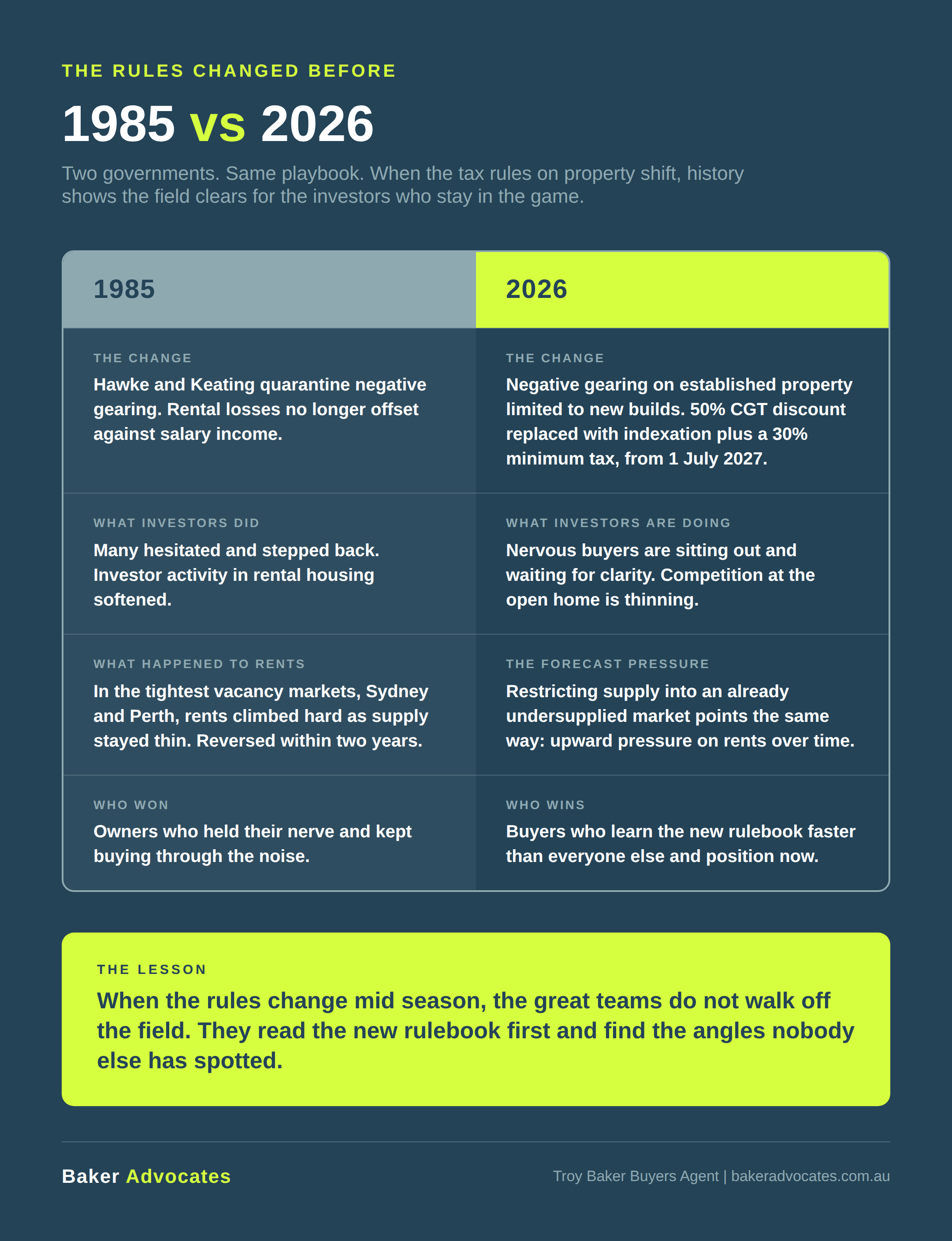
When the government announced it would restrict negative gearing on established properties and replace the 50 percent CGT discount with indexation and a 30 percent minimum tax from 1 July 2027, the headlines did what headlines do. They screamed that investors were finished.
So a chunk of investors believed it. They hesitated. They stepped back. They are waiting for clarity that may not arrive for months.
That is not a threat to the buyers who understand what is happening. That is a clearing of the field.
Less investor competition at the very moment owner occupiers are already stretched and supply is not keeping up. Fewer hands in the air at the auction. More room to negotiate. The buyers who take the time to understand the new rules are walking into a market the nervous ones just vacated.
What history actually tells us
Here is the part nobody wants to say out loud. When you make it harder and more expensive to provide rental housing, you do not magically create more of it. You tend to create less.
We have been here before.
In July 1985, then Treasurer Paul Keating quarantined negative gearing. Rental losses could no longer be offset against salary income. Within two years the policy was reversed. The story you usually hear is that rents skyrocketed across the country and forced the government's hand.
The honest version is more interesting, and it actually strengthens the point. Rents did not explode everywhere. They rose hard in the cities that already had the tightest vacancy rates, Sydney and Perth, where supply was barely keeping pace before the change at all. In markets with more breathing room, the effect was muted. By 1987 the policy was gone, with the government itself acknowledging the pressure it had created in the tightest rental markets.
The lesson is not "every tax change sends rents to the moon." The lesson is sharper than that. When you discourage investment in a market that is already short on housing, the squeeze lands hardest exactly where stock is already scarce. And right now, large parts of Australia are sitting on some of the lowest vacancy rates in a generation.
I am not celebrating that outcome for tenants. I am being honest about how supply and demand behaves when you spook capital out of a market that is already undersupplied.
The rules changed. We did not stop playing.
Here is how I think about it.
In sport, when the rules change mid season, the great teams do not walk off the field in protest. They study the new rulebook before anyone else does, and they find the angles the rule writers never intended. The rest of the competition is still standing around arguing about whether it is fair. The winners are already three plays ahead.
That is exactly what we have done for our clients at Baker Advocates.
The new rules do not touch property bought before budget night. They do not apply to eligible new builds, which keep both negative gearing and access to existing concessions. Commercial property and other asset classes sit under their own arrangements entirely. And the structure you buy in matters more now than it has in years.
We have already rebuilt the playbook around the assets and structures that still stack up under the new system, so our clients can buy with confidence while everyone else is still reading the headlines.
What this means for you
If you own property bought before budget night, your position is protected. If you are looking to buy, the field is genuinely clearing in front of you, and the question is which assets and which structures make sense under the new rules rather than the old ones.
The version of this budget you are being sold on the evening news is built for clicks. The version that actually affects your strategy is a very different conversation, and it is the one worth having.
The rules changed. The smart money did not stop playing. It learned the new rules faster.
If you want to understand how the budget actually affects your strategy, book a discovery call - www.bakeradvocates.com.au/discovery-call. The field is clearing. The only question is whether you are on it.
*This article is general information only and does not take into account your personal circumstances. It is not financial, tax or legal advice. The negative gearing and CGT measures discussed were announced in the 2026 to 27 Federal Budget and are intended to apply from 1 July 2027. As at the date of writing they are not yet law and remain subject to change. Speak to a licensed adviser before making any investment decision.